All You Need Is An Idea!
Our skilled team is here to bring it to life.
Our skilled team is here to bring it to life.

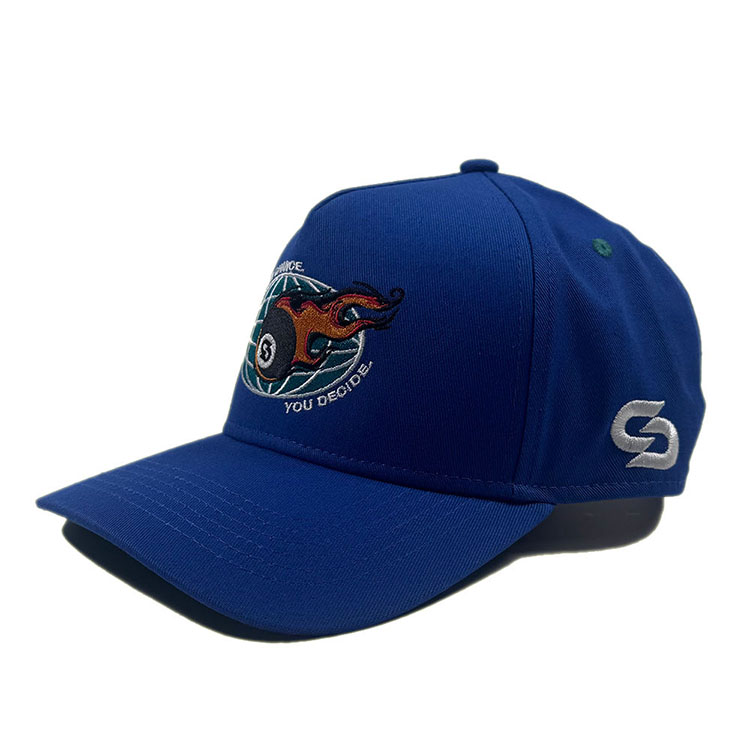
Most buyers treat logo decoration like a style choice. I think that is lazy. On custom hats, decoration is a production, compliance, and brand-positioning decision, and the wrong method will expose weak artwork, bad materials, sloppy QC, and fake “premium” claims fast.
Most buyers guess. I have watched too many custom hat projects die not because the logo was ugly, but because the buyer chose a decoration method that fought the fabric, the crown shape, the placement, the budget, and the shipping timeline all at once, which is exactly why this topic should sit in the middle of a reader path that moves from design support for custom hats to custom fabric and craft options, then into custom hats and caps manufacturing, quality control for bulk custom hats, and private label labels and packaging. Why pretend decoration lives in a vacuum?
I’ll say the rude part. “Best” logo decoration methods do not exist in the abstract; there is only the best method for your artwork, your hat silhouette, your retail price target, and your tolerance for failure in sampling and bulk production. The site itself already telegraphs this if you read it closely: it showcases 3D puff snapbacks, logo patch truckers, woven patch 5-panels, all-over print bucket hats, embroidered visors, and a craft menu that includes embroidery, 3D embroidery, woven patches, leather patches, rubber patches, screen printing, and heat transfer printing. That is not decorative variety. That is a decision tree.
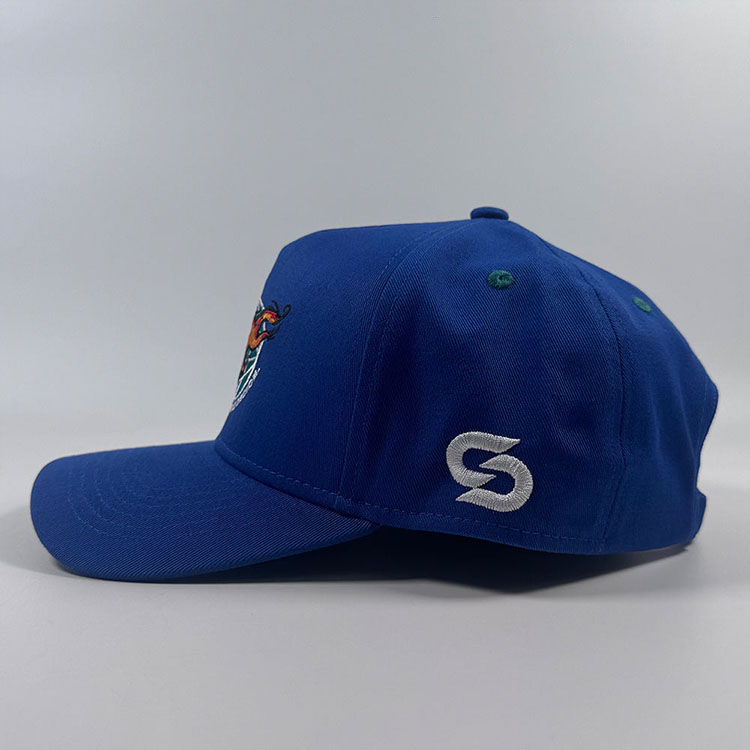
Three hard truths. First, flat embroidery is still the safest money-maker for brand hats because it hides less than people think, survives abrasion better than most print options, and signals “retail” faster than low-end transfers. Second, 3D puff embroidery looks expensive until somebody tries to force fine serif text or thin script through foam on a low-profile crown. Third, patches are often the smartest compromise when artwork is too detailed for thread but too brand-sensitive for a cheap print. Didn’t you already know that, deep down?
The site’s strongest internal architecture supports exactly that logic: it asks for editable AI, EPS, PDF, or PSD files on the design page; it frames embroidery, printing, and patches as artwork-dependent choices on the fabric-and-crafts page; and it ties those choices back to product styles such as snapbacks, truckers, bucket hats, visors, and 5-panels on the custom hats page. That is the right sequence, and I would keep feeding it with internal links because it matches how real buyers make decisions.
Tiny details matter. A logo method that looks perfect on a flat mockup can collapse once you push it onto cotton twill, polyester mesh, brushed canvas, curved seams, center-front structure, or a side panel with less real estate than the art department admitted, which is why I care far more about method-fit than trend-chasing. So which method earns its keep?
| Decoration Method | Best Use Case | What I Like | What I Distrust |
|---|---|---|---|
| Flat embroidery | Clean logos, monograms, retail-focused brand hats | Durable, textured, premium, easy to justify on snapbacks, dad hats, 5-panels, visors | Tiny text, gradients, photo-style detail |
| 3D puff embroidery | Bold block logos on structured fronts | Strong shelf impact, streetwear-friendly, higher perceived value | Fine lines, long words, unstructured crowns, weak foam execution |
| Woven / leather / rubber patches | Detailed logos, badge-style identity, outdoor or workwear cues | Handles detail better than thread, hides some crown distortion, strong brand character | Cheap patch materials, thick patch edges, poor stitch-down quality |
| Screen printing | Simple one- or two-color graphics on flatter surfaces | Good for bigger graphics, solid color fill, efficient on some styles | Mesh backs, seams, heavy curvature, premium-positioning claims |
| Heat transfer | Fine-detail logos, small runs, short lead times, special effects | Sharp edge definition, fast setup, flexible for testing art | Long-term abrasion, heat sensitivity, “cheap merch” perception when overused |
I’m not inventing the menu here. The site’s own custom-hats page and fabric-and-crafts page already position embroidery, 3D embroidery, patches, screen printing, and heat transfer as the core hat logo decoration methods to discuss based on artwork, style, and market; I’m simply translating that into the language buyers actually use when money is on the line.
I trust embroidery. When a buyer wants a logo that feels permanent, resists handling, and does not scream “promo giveaway,” flat embroidery remains the default answer because thread gives shape, shadow, and tactile value without depending on surface adhesion or perfect environmental handling. Who exactly regrets choosing competent embroidery on a good twill cap?
But I also think buyers romanticize it. Embroidery simplifies art. It thickens lines, kills tiny counters inside letters, and punishes anyone who hands over a fussy logo built for screens instead of stitches, which is why smart readers should move directly from this article into design support for custom hats before they ever ask for a sample quote.
This one sells. A well-executed 3D puff logo on a structured snapback can make an ordinary cap look like a real branded product instead of leftover event merch, and the site is already leaning into that with its 3D puff snapback examples on the custom caps page. Why do so many buyers still force delicate art into a method built for bold shapes?
My rule is simple: if the logo needs thin strokes, internal detail, stacked small text, or precise contour fidelity, I stop the conversation early. 3D puff is drama. It is not precision surgery.
Patches save projects. When the art is too detailed for thread, when the customer wants a badge look, or when the front panel cannot carry clean embroidery without distortion, patches—woven, leather-look, rubber, or stitched badges—often give you the sharpest brand read with the least technical stress. Isn’t that why patch truckers keep winning in outdoor, workwear, and heritage categories?
The site supports that move more than most factory sites do, because it pairs patch-ready styles on the custom hats page with material language on the custom fabric and craft options page and brand-finishing logic on the private label labels and packaging page. That internal path is commercially smart: front-logo method first, inside-brand system second.
Screen printing on hats is not dead. It is just abused. On the right silhouette, with the right panel geometry and simple artwork, screen print can deliver crisp fills and better graphic scale than embroidery, especially when the logo is more poster than badge. But try forcing it over mesh, seams, heavy crown curvature, or “premium brand” positioning and the weaknesses show fast.
I would use it selectively, not romantically. The site lists screen printing among available craft options, which is correct, but the buyer still has to ask the grown-up question: does this hat shape actually want to be printed, or are we trying to make a flat decoration behave on a three-dimensional object?
Heat transfer hats can look clean. They can also age badly in the wrong use case, because detail retention and quick setup do not automatically equal premium perception once the cap gets flexed, rubbed, packed, stacked, shipped, and worn in actual weather instead of photographed under studio lights. Do you want a logo that wins the mockup, or one that survives the season?
I use heat transfer for fine detail, shorter runs, certain technical looks, and cases where embroidery would butcher the art. I do not use it to fake luxury.
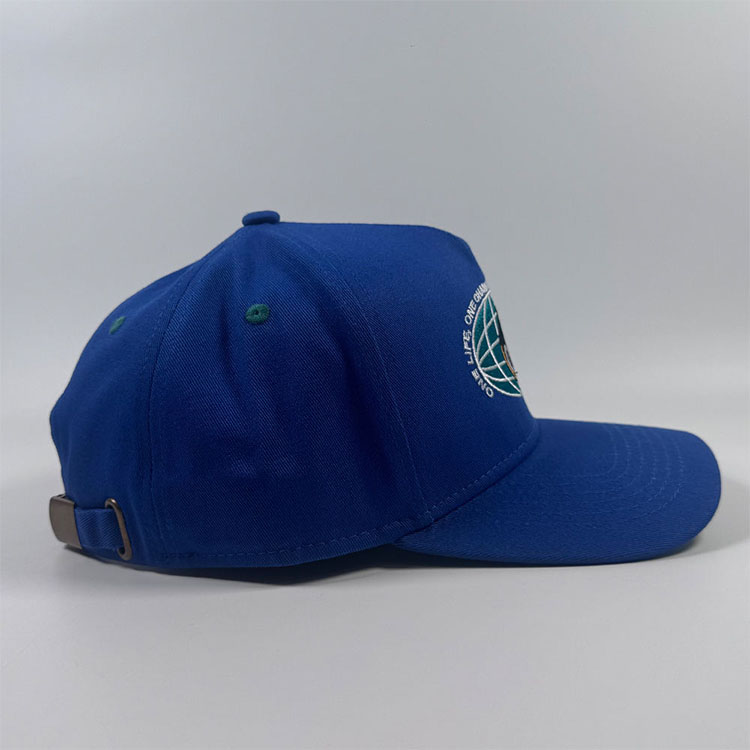
Sampling reveals everything. The site’s own workflow—and its stronger blog content—push readers from artwork and method selection into sample review, bulk production, inspection, labeling, and shipment, which is the only sequence that makes sense if you have ever had a “perfect” sample turn into a bulk run with flatter embroidery, crooked patch placement, mixed closures, or mislabeled cartons. Why do buyers keep acting surprised when the pre-production sample was the easy part?
And here is the part marketers hate. Decoration mistakes rarely stay decorative. A bad method choice becomes a quality-control problem, then a packaging problem, then a margin problem. The site’s QC page is actually useful because it names the boring stuff people skip: material inspection, visual inspection, measurement checks, functionality testing, and packaging-and-labeling inspection, with checks on stitching, embroidery, printing quality, brim width, crown height, closures, and final brand information. That is where custom hat decoration methods stop being aesthetic chatter and become operational math.
Logos are loaded. The minute a buyer asks a factory to stitch, print, or patch a logo that they do not clearly control, this stops being a craft discussion and turns into trademark exposure, which is why I think too many sourcing teams behave like decorators when they should be behaving like risk managers. Wasn’t that obvious the first time someone said “Can you just make it look like Brand X”?
The cleanest warning comes from the U.S. Supreme Court’s 2023 Jack Daniel’s decision: when a mark is used as source-identifying branding on goods, ordinary trademark rules and “likelihood of confusion” analysis do real work, even when a seller tries to wrap the product in parody language. That is not abstract law-school theater. It matters if your custom patch hat or embroidered cap borrows too much from somebody else’s identity.
Compliance is expensive. According to Reuters’ September 2023 reporting on U.S. Customs testing, about 27% of apparel and footwear tests taken by CBP in May 2023 were consistent with Xinjiang cotton, and 13 of 86 tests overall showed the same signal; then, in Reuters’ September 2024 enforcement summary, CBP was described as having reviewed more than 9,000 shipments worth over $3.5 billion since 2022 and denied entry to almost 4,000 of them. Still think fabric provenance is somebody else’s problem?
I bring that up here for a reason. Buyers love debating 3D puff embroidery hats versus custom patch hats, but they go oddly quiet when the discussion turns to cotton origin, patch backing materials, label accuracy, and documentary proof inside the supply chain. That silence is expensive.
Fake goods move. In Reuters’ July 2024 report on France’s anti-counterfeit crackdown, customs seizures hit 20.5 million counterfeit products in 2023, up 78% from 11.5 million in 2022, which is exactly why serious buyers should care about authentication cues, private labeling, and clean brand ownership on every cap they produce. If your hat can be mistaken for somebody else’s, or vice versa, why would you leave the details sloppy?
I start narrow. If the logo is simple, bold, and meant to read as a real brand asset, I start with flat embroidery; if it needs swagger and the front panel is structured, I test 3D puff; if the art is detailed or badge-like, I move to patches; if the logo is graphic and the hat surface cooperates, I consider screen printing; and if the art needs very fine detail or fast iteration, I consider heat transfer. Why make this harder than it is?
Then I try to kill the idea. I check whether the method still works after artwork simplification, crown curvature, seam placement, color count, wear friction, unit economics, and bulk consistency are factored in. That is also why this article should hand readers off to the complete custom hat process from sampling to shipment, because method choice without process control is just optimistic styling.
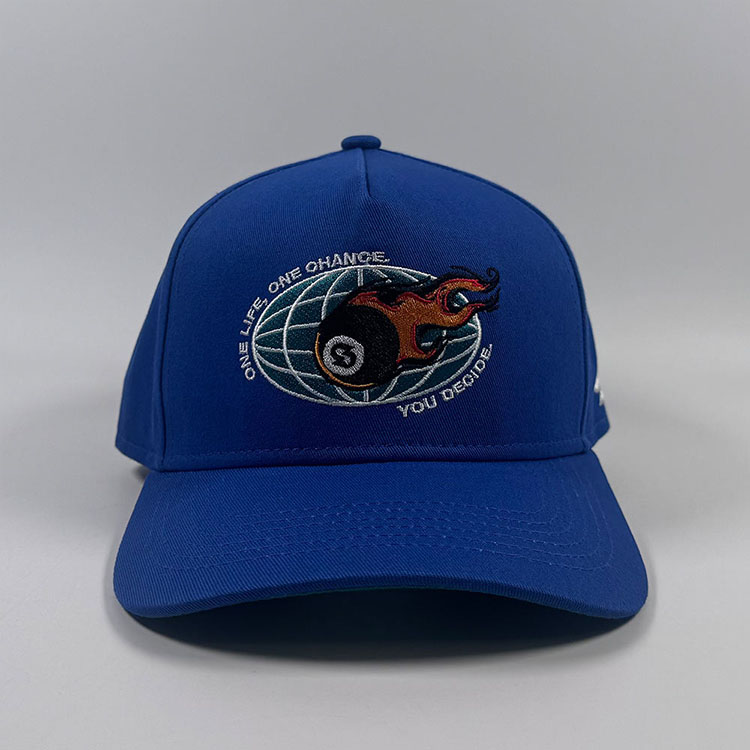
The best logo method for custom hats is the decoration technique that matches the artwork complexity, hat structure, material behavior, retail positioning, and durability target at the same time, which usually means flat embroidery for brand logos, patches for detailed badge artwork, and 3D puff only for bold designs on structured fronts. I would never answer this from the logo file alone.
Choosing a hat decoration method means testing the logo against five variables—line thickness, hat silhouette, fabric texture, target price, and wear conditions—so that the final method survives sampling, bulk production, and customer handling instead of merely looking good in a digital mockup. Start with the art, but finish with manufacturing reality.
Custom patch hats are better than embroidered hats when the logo has fine detail, layered shapes, badge-style branding, or material storytelling that thread alone cannot reproduce cleanly, while embroidered hats are usually better when the goal is long-term durability, tactile value, and a more classic branded look on mainstream retail cap styles. Patch is not “better.” It is often more forgiving.
Heat transfer hats are durable enough for some branded collections when the artwork needs crisp detail, the use case is lighter, and the production brief values speed and visual precision, but they are usually a weaker choice than embroidery or well-built patches for abrasion-heavy, premium-positioned, or long-life headwear programs. I use them carefully, not lazily.
Stop guessing. If you want this page to convert, make the CTA practical and force the buyer into better inputs: logo file, preferred hat style, target quantity, placement notes, target ship date, and a first-choice versus second-choice decoration method.
I’d send readers straight to design support for custom hats or the contact page with a simple brief: AI/EPS/PDF/PSD logo file, reference images, Pantone direction, hat silhouette, closure preference, decoration method, packaging needs, and launch date. The site already asks for exactly that kind of project input; the smart move is to turn that into habit before sampling starts.

Copyright© 2026 Hat Manufacturer. All Rights Reserved.
